

Look around and almost everything you see, use or depend on has a story that begins with commodities. From the energy that powers homes and businesses to the materials that shape the buildings where we live and work, the bridges that connect cities and regions, and the vehicles that move people and goods around the world, commodities are woven into everyday life.
Even technologies that seem intangible rest on a physical foundation. Artificial intelligence, for example, depends on data centres, power grids, cooling systems, and fibre-optic and communication networks. Behind every digital breakthrough lies a vast amount of physical infrastructure built with commodities.
Energy, mobility, infrastructure, digital applications: metals, minerals and energy commodities form the foundation of modern life and help power the breakthroughs of tomorrow.
Energy
A reliable energy supply begins long before the socket. Electricity has to be generated, then stored and distributed. Making that possible requires resilient grids, advanced storage systems and materials that conduct electricity efficiently. Commodities such as copper, aluminium, nickel and cobalt are an important part of that story. Found in cables, transformers, batteries and many other technologies, they help bring energy to where it’s needed.
This image was AI-generated. AI needs commodities too: copper, cobalt and aluminium, for example, for secure, high-performance data centres.
Hydropower
supplies almost 60% of Switzerland’s electricity. The journey from mountain water to the socket depends on a vast network of turbines, generators, pressure pipelines and power grids, all built with commodities.
600 billion
kilowatt hours of electricity are used by data centres worldwide each year, according to estimates. As artificial intelligence expands, so does the demand for energy and resources. High-performance servers, power grids, transformers, cables, storage systems and cooling technologies all depend on commodities such as copper, cobalt and aluminium, which help keep the digital world running.
More than 80 million kilometres
of power grids would need to be built or renewed worldwide by 2040 for global energy and climate targets to be met. That is roughly equivalent to the entire length of today’s power grid network. Expanding and modernising this infrastructure will require vast amounts of copper, aluminium and other commodities.
Mobility
Mobility goes beyond movement. It shapes how fully people can participate in society: commuting to work, visiting family and friends, or travelling to social and sporting activities. It also determines how goods move and how communities and regions stay connected. Modern transport systems rely on durable materials, electrical components and energy storage solutions. Commodities such as copper, aluminium, nickel and cobalt help provide the foundation for vehicles, rail networks, energy infrastructure and digital control systems. They help keep society moving today and support the journeys of tomorrow.
This image was AI-generated. AI needs commodities too: copper, cobalt and aluminium, for example, for secure, high-performance data centres.
This image was AI-generated. AI needs commodities too: copper, cobalt and aluminium, for example, for secure, high-performance data centres.
An hour closer
is how much northern and southern Europe have been brought together by the Gotthard, Ceneri and Lötschberg base tunnels. Built with commodities such as copper, aluminium and zinc, this modern rail infrastructure helps shorten journeys, reduce transport costs, and link people and markets.
One in four new cars
sold worldwide in 2025 was electric. Electric mobility is transforming how people travel and how energy is used. Making that possible requires batteries, motors, cables and charging infrastructure that rely on commodities such as copper, nickel and cobalt.
9.8 billion travellers
passed through the world’s airports in 2025, according to estimates. Air travel connects people, families and economies across the globe. Making that possible requires aircraft, airports and technical infrastructure that depend on commodities such as coal for steelmaking, copper, nickel and zinc.
Infrastructure
Reliable infrastructure helps societies function every day. It supports the buildings where we live and work, connects people and places, protects essential supply systems and provides access to public services. Roads, railway stations, hospitals and technical networks need materials with specific properties to stay resilient over the long term: strength, corrosion resistance, formability and conductivity. Commodities such as zinc, aluminium, copper and coal for steelmaking make an important contribution. Found in structures, industrial facilities and pipelines, they help keep society running today and into the future.
This image was AI-generated. AI needs commodities too: copper, cobalt and aluminium, for example, for secure, high-performance data centres.
The nervous system
of a hospital is copper. Around-the-clock care depends on critical equipment being ready to operate at any moment, supported by high-performance electrical infrastructure.
Often overlooked, never optional
When we think about mobility, lifts and escalators rarely come to mind. Yet more than 18 million are in operation worldwide. Without them, high-rise buildings, hospitals and office complexes would be hard to imagine. Behind their smooth operation are drives, cables and components that rely on commodities such as copper, aluminium and nickel. Often unseen, these materials help make reliable mobility possible.
65,000 kilometres
is more or less the length of Switzerland’s water network. The journey from rivers and lakes to homes, businesses and communities depends on infrastructure such as weirs, power plants, pipelines and storage facilities. Behind these are steel and electrical systems built with commodities such as coal for steelmaking, copper and zinc.
Copper
Copper
Copper is an absolute all-rounder. You'll find it in cabling, computer connections and wind turbines, since it is particularly conductive. Copper is also used for drinking water pipes and sanitary fittings. Finally, as an alloy, it is resistant to high temperatures and corrosion. According to the IEA*, some 25.8 megatonnes of copper were needed in 2023. In 2050, the demand is expected to reach around 40 megatonnes*, and the upward trend looks set to continue. We extract this raw material from copper ore. We mine and process it in South America and the Democratic Republic of the Congo.
-
1083°C
is the melting point of copper.
-
>80%
of energy required by primary production can be saved by recycling copper.
-
8400 km
of overhead lines made from copper have been installed by SBB for its Swiss infrastructure.
Metal of the future
Discover the history of copper. How it is mined, what it is used for today, and why it is so important for the future.
Video produced in February 2023
Good to know
Demand for copper
Zinc
Zinc
Zinc is estimated to be the fourth most commonly used metal in industry after iron, aluminium and copper. As a coating, it can help to protect steel and iron from rust. This makes zinc important for the infrastructure behind renewable energy, such as offshore wind turbines. But it can also be found in aerospace technology, buildings, vehicles and nearly every household. Electrical appliances and the circuit boards of mobile phones often contain zinc, as do pharmaceutical products and cosmetics. In nature, zinc is mostly found bound in ores. We extract, process, smelt and refine these ores. Various recycling processes also make it possible to reuse zinc.
-
0.007%
is the approximate proportion of zinc in the earth's crust, making it – quite surprisingly – a fairly abundant element.
-
419°C
is the melting temperature of zinc.
Zinc in action
-
Zinc sounds good
Perhaps the next time you hear a brass band, your mind will suddenly turn to raw materials – or zinc, for that matter. After all, the brass in many wind instruments such as the trumpet, horn, trombone and tuba is an alloy made of copper and zinc.
-
Zinc looks pretty
Many cosmetics and medicinal creams contain zinc oxide. It helps to dry out and combat blemishes and skin inflammation. Zinc oxide also protects the skin from UVA and UVB radiation – which is why it can be found in many sunscreens.
-
Speedsters, big and small
Still have an old toy racing track in the attic? Or a couple of toy cars? If so, you probably have lots of fond memories. From the 1930s onwards, these little objects of desire on four wheels were manufactured as die-cast moulds made of zinc alloys. But even larger cars, not to mention racing cars, can benefit from this raw material. Strength, flexibility and, above all, resistance to corrosion are some of the key properties of zinc alloys. A major topic for mobility as a whole.
Good to know
Zinc demand for wind power
Around the world, people are working to implement effective climate protection. One way of achieving this is by using renewable energies. As a result, the demand for zinc is considerable in the case of wind power, among others.
* https://www.iea.org/data-and-statistics/data-tools/critical-minerals-data-explorer (Announced Pledges Scenario)
Nickel
Nickel
Nickel can be found in many things – such as in aircraft and rocket engines, in the batteries that power laptops, toys, kitchen appliances and DIY tools. But it can also be used in breweries' beer tanks, thermos flasks and in Swiss coins. Nickel is often invisible. That's because it is usually used in small quantities to make alloys. Yet it can have a huge impact. It can help make batteries in EVs more powerful. Engines can be used at high temperatures and are less likely to melt. And stainless steel is less likely to corrode when it is used in cooking or as a construction material. As a side note, approximately two thirds of global nickel production is used to produce stainless steel. Our nickel operations are located in Canada, Australia and Norway.
-
6000°C
is the approximate temperature of the earth's inner core – it is made up of nickel and iron.
-
1751
Axel Frederic Cronstedt discovers the previously unknown mineral and names it nickel.
-
1881
The first coin made of pure nickel was minted – a Swiss 20-centime coin.
Nickel – an absolute all-rounder
Find out about the countless uses of nickel and what it can do for the future.
Video produced in February 2022
Good to know
Demand for nickel
* https://www.iea.org/data-and-statistics/data-tools/critical-minerals-data-explorer (Announced Pledges Scenario)
Cobalt
Cobalt
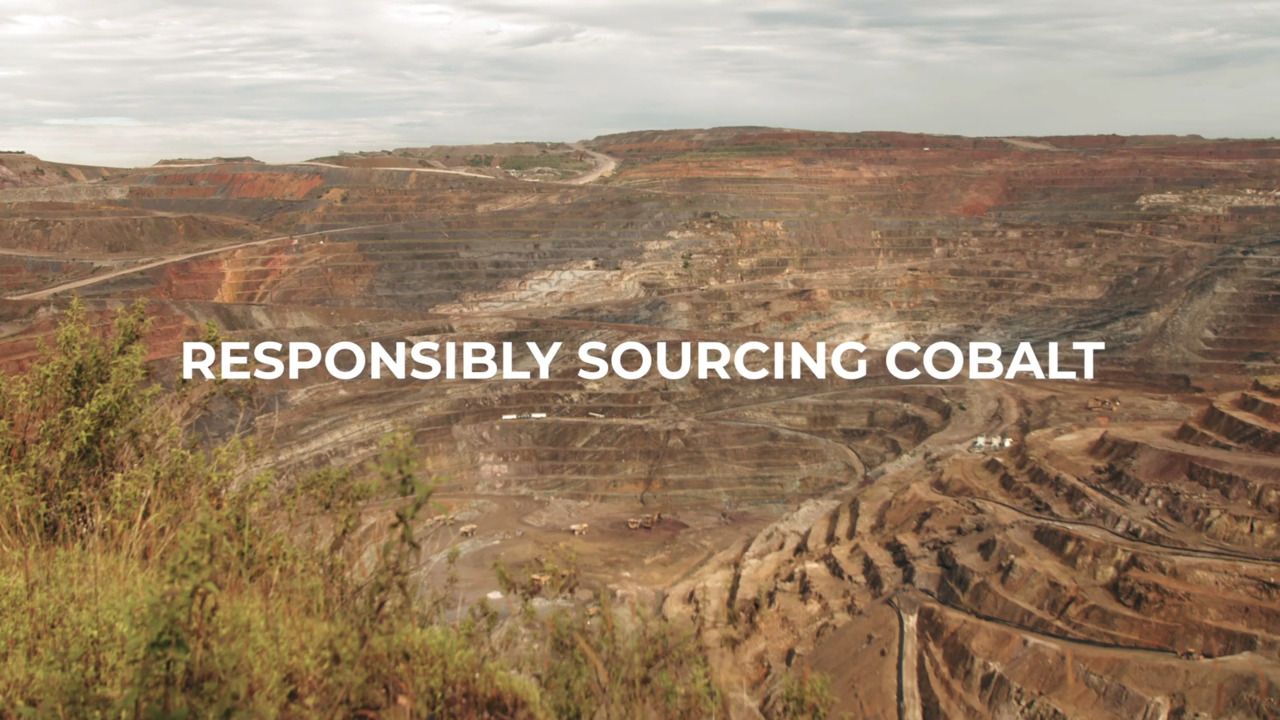
As we move towards a low-carbon economy, cobalt is a key raw material. Electric mobility, renewable energy systems and electronic devices such as laptops and mobile phones often contain cobalt. After all, this metal offers a whole range of useful qualities. One example is that it can protect rechargeable batteries from overheating, making them safer and longer-lasting. It can also increase the strength of tools and enhances the strength, toughness and conductivity of materials. Cobalt is not usually found in its pure form, but as a by-product of copper and nickel production. We extract and process cobalt in the Democratic Republic of the Congo, in Australia, in Canada and in Norway.
-
-253°C
is what an alloy of cobalt, nickel and chromium can withstand without becoming brittle.* One of the highest resistance measurements ever recorded.
-
1877
saw Claude Monet use the cobalt-coelin blue pigment for the sky in his painting "La Gare Saint-Lazare". And Picasso evidently agreed with Monet. In fact, he ordered cobalt cerulean blue labelled "Heavenly blue".
Cobalt is so much more
Discover how we mine cobalt and everything it entails.
Video produced in June 2021
Good to know
Demand for cobalt
Aluminium
Aluminium
Aluminium can be found in many industrial sectors. And for good reason: it is both light and impressively strong and durable, making it a particularly valuable raw material for the automotive and transport sectors. Construction and renewable energy systems, such as photovoltaics, also rely on aluminium. And the material is important in everyday life too – from packaging to smartphones and refrigerators through to garden furniture.
But let's go back to the start: aluminium does not occur in nature in its pure form, but rather only in chemical aluminium compounds. In other words, aluminium must first be extracted – namely from bauxite. Bauxite is the world's most abundant source of aluminium ore and a natural raw material that can occur as solid rock or loose soil. What is special about aluminium is that it can be recycled endlessly with no loss of quality – and requires only five percent of the energy needed to produce primary aluminium. Countries with the highest levels of secondary aluminium production are China, the USA, Japan and Germany. Currently, the proportion of recycled aluminium worldwide is between 30 and 40 percent. We market products made from aluminium and aluminium oxide from a range of third parties.
-
90%
of aluminium beverage cans in Switzerland are recycled – that's 1 kg per person every year.
-
6,700 km
of extra-high-voltage lines made of aluminium alloy carry electricity through the Swiss transmission grid.
-
146
million tonnes of aluminium are expected to be needed worldwide in 2050, according to the IEA.*
Good to know
Coal
Coal
Coal is a combustible sedimentary rock formed from organic matter in the ground over millions of years. In addition to a great deal of time, this process required pressure, heat and the absence of air. Coal was already being mined in the United Kingdom and mainland Europe by the end of the 12th century. By the 19th century, coal had become a driving force for the economy as a source of energy. For many countries, including Switzerland, coal was an important accelerator of development.
Today, coal provides the world with a dilemma, as, on the one hand, the fossil fuel is one of the largest sources of CO2 emissions. On the other, coal remains a key element in the production of electricity, cement, steel and chemicals. In 2022, it is estimated that approx. 36% of global electricity was generated from thermal coal, approx. 90% of the world's cement was produced using coal, and about 70% of global steel production was dependent on coal.
Our coal operations are located in Australia, Canada, South Africa and Colombia.
-
345
million years – the approximate age of some coal deposits.
-
170
tonnes – the amount of steelmaking coal needed to manufacture one wind turbine.
Good to know
Coal demand
Future demand for coal is difficult to determine. Scenarios from the International Energy Agency indicate that global demand reached its peak in 2022 and is expected to decline in the future. In the Announced Pledges Scenario, the IEA estimates that global coal consumption will decline by 20% by 2030 and by more than 70% by 2050.
Oil
Oil
Crude oil is a complex mix of more than 17,000 organic components. It is stored in the Earth's crust, from where it is extracted. Various oil products are obtained through industrial processing (refining). These are primarily fuels such as petrol and diesel for vehicles, as well as jet fuel, heating oil and liquefied petroleum gas. We mainly source oil that is used as energy.
Byproducts of oil production also include asphalt, paraffin and lubricants – all of which are used in everyday life. Roads are made from asphalt, while paraffin is used to make candles and creams, among other things. Lubricants are needed in mechanical parts. Gearboxes in machines, for example. In the chemicals industry, crude oil is often required to produce plastics. Oil remains one of the world's most important commodities and, as there is currently no mature technology that can replace it across the board, it will continue to play a major role.
-
12000
years – approximately how long ago crude oil was first discovered.
-
158.98
litres – the amount of crude oil that fits into one barrel (U.S.). This has become the accepted unit of measurement for crude oil.